How to scale agents in a controlled way without slowing down innovation

Maintaining control over the development, deployment, and management of agents in a growing Copilot ecosystem

Agents are evolving rapidly within Microsoft Copilot. Employees are discovering how easy it is to build an agent themselves to automate tasks, retrieve information, or accelerate processes. What starts as individual productivity gains can quickly grow into an environment with dozens—or even hundreds—of agents.
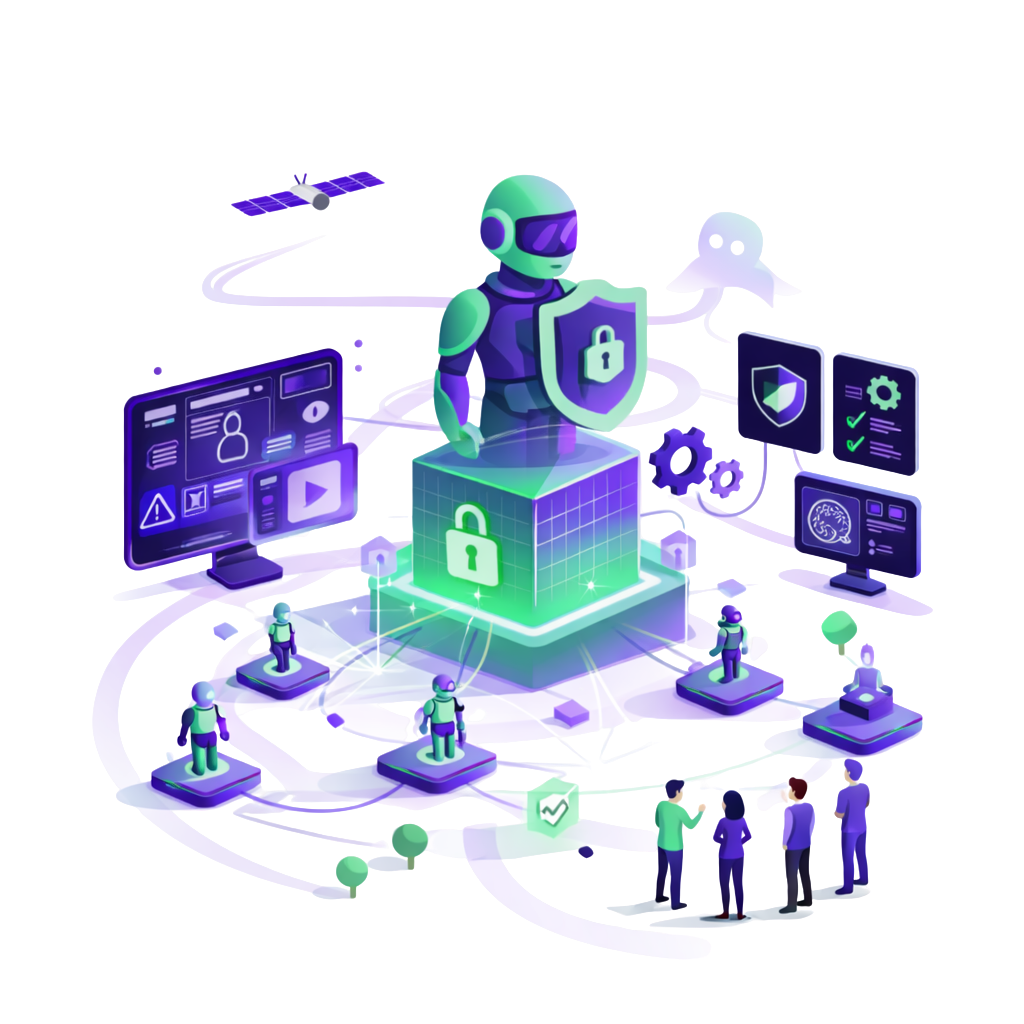
Most organizations find themselves exactly at this tipping point. There is enthusiasm and ambition, but clear frameworks are still missing. IT has limited visibility into what is being built, security teams question which data sources are being accessed, and management wants to avoid slowing down innovation.

The question, therefore, is not whether you should allow agents, but how to deploy them securely and manageably without draining the energy from the organization.

What we see

With a Copilot license, any employee can develop agents. Copilot Studio offers more than a thousand standard connectors that make it easy to connect with internal and external systems. This makes innovation highly accessible, but it also introduces risks.

In many organizations this leads to:

A proliferation of agents without clear ownership
Unintended access to sensitive data sources
Agents being shared organization-wide without a management structure
Unmanaged agents when employees leave the organization
No integrated overview of usage, value, and costs


This pattern strongly resembles what happened during the rapid adoption of Microsoft Teams during the COVID period. At that time the focus was on collaboration; today it is about AI that actively works with data and executes actions independently. As a result, the impact is greater and the risks are more complex.

Without clear governance, tension arises between innovation and control. And that tension can ultimately lead to delays or costly remediation afterwards.

Agent Governance: Creating structure in a dynamic AI landscape

Once agents start spreading throughout the organization, a new type of IT landscape emerges. It is no longer just traditional applications and processes that require management, but also logic, data integrations, and autonomous workflows that employees configure themselves.

This requires a governance approach that goes beyond simple access management. It involves organizing ownership, defining development guidelines, and establishing technical guardrails within the Microsoft environment.

An effective governance model for agents consists of two closely connected building blocks:


1. A clear foundation

This foundation defines development zones, assigns responsibilities, and configures technical settings. It ensures clarity around what is allowed in each context and how agents can safely use data sources and connectors.
Agents Governance Wortell

2. Structural governance

AI capabilities evolve continuously. New settings, additional connectors, and changing usage patterns require regular evaluation. By treating governance not as a one-time setup but as an ongoing process, the environment stays aligned with both technological developments and organizational ambitions.

Agents Governance Wortell


In this way, governance does not slow innovation down, but creates a stable foundation on which agents can grow in maturity and impact.

The agent control model: three distinct development zones

Not every agent has the same impact or risk profile. That is why we work with a zone model that balances innovation and control.

Agents Governane Wortell

Citizen Development

This zone focuses on individual productivity. Employees develop their own agents to work more efficiently. The environment is configured so that experimentation can happen safely while sensitive data remains protected. Creativity is encouraged without introducing management challenges.

Agents Governance Wortell

Partner Development

In this zone, agents are used more broadly within teams or departments. Business and IT collaborate to ensure quality and further development. Ownership, standards, and best practices are clearly defined. Innovation gains structure and professional management.
Agents Governance Wortell

Professional Development

Business-critical agents fall under full IT governance. They support essential processes or have organization-wide impact. Strict governance requirements, monitoring, and support are standard. Reliability and compliance take center stage without blocking innovation.

Our approach: from insight to implementation

1. Inspiration and exploration

We start with a workshop in which we analyze the current situation and associated risks. We discuss how agents work and how other organizations approach them. This creates a shared foundation for IT, security, and business to make focused decisions.

2. Rules, guidelines, and zoning

In a second session, we translate insights into concrete agreements. We determine which types of agents belong in which zones, define data access, ownership, and technical guardrails. Not a generic model, but best practices tailored to your organization.

3. Blueprints and technical design

Based on the decisions made, we develop three blueprints. These include rules and guidelines, technical configurations, and clear maker documentation. After approval, we configure the environment accordingly. Within four weeks, a solid foundation is in place for secure and manageable growth.

Continuous governance: Control that evolves with AI

AI developments move quickly. That is why effective governance does not stop once frameworks and guidelines are in place. It is an ongoing process of evaluating, adjusting, and improving.

With Agent Governance, we ensure that your organization is not only optimally configured today, but also maintains control over the development, deployment, and impact of agents in the future. Within our ongoing Agent Governance service, we provide:

By combining data from multiple admin portals, a single integrated overview emerges. This makes it clear which agents deliver value, which can be cleaned up, and which may be ready to move to the next development zone.

Governance therefore becomes not a barrier to innovation, but a strategic instrument for steering it.

Jair Hokstam Wortell

Blog: Understanding first, then accelerating. The key to a successful AI organization.

With AI, you can benefit immensely as an organization. But only if you realize that AI is one means to an end, and not an end in itself. Read more.


What does this deliver for you?

Instead of correcting issues afterwards, you gain control from the very beginning.

  • Manageable and secure AI adoption

  • Less sprawl and duplication

  • Clearly defined ownership

  • Transparency in costs and usage

  • Better collaboration between IT, security, and business

  • Faster scaling of successful initiatives

Why Wortell?

Wortell combines deep Microsoft expertise with extensive experience in governance challenges, including Teams Governance and Copilot implementations. Through our AI-first strategy, we help organizations not only adopt AI, but integrate it sustainably and securely into their IT landscape.

We don't believe in limiting innovation. We believe in its controlled acceleration.
Jesse van der Zwet

AI Solutions Wortell

FAQ

Frequently asked questions around Agent Governance
When is the right time to set up Agent Governance?

The ideal time is before agents are deployed organization-wide en masse. In practice, we see that organizations step in as soon as they notice a lack of overview or an increase in security questions.

Is this relevant if we are still in an early Copilot phase?

That is precisely when it is valuable. Governance that gets it right from the start prevents complex recovery projects later on.

Does governance inhibit employee creativity?

On the contrary. Clear frameworks create trust and clarity, allowing employees to know where they are free to experiment and where additional control is needed.

Can agents really lead to compliance or data risks?

Yes. Available connectors allow agents to access sensitive data sources. Without targeted settings and guidelines, this can create unintended risks.

How much effort does this require from our organization?

The foundation is set up within four weeks, with two content workshops and coordination in between. After that, monthly assurance requires an average of about one hour of consultation per month.

Contact us for a free consultation